Updated
By Jason Ansell
Why APIs Are the New Economy
APIs quietly power the modern digital economy by connecting software, services, data, payments, AI, and infrastructure behind the apps people use every day.
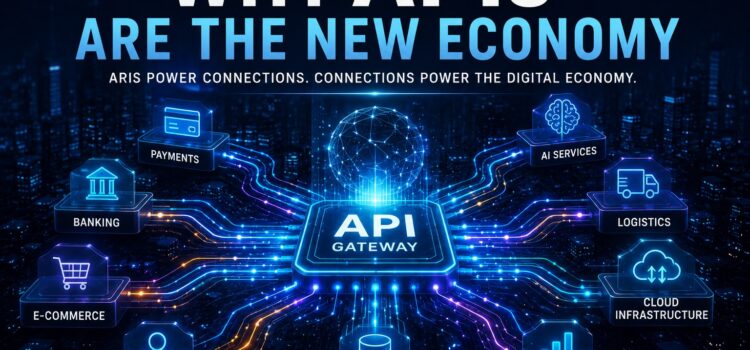
The modern economy increasingly runs on connections.
Not roads.
Not railways.
Not even websites.
Connections between software.
A payment platform connects to a bank.
An e-commerce store connects to a shipping provider.
A mobile application connects to a mapping service.
An AI assistant connects to a calendar.
A business dashboard connects to accounting software.
A logistics system connects to inventory data.
None of these connections are particularly visible to the user.
Yet they are what make modern digital services work.
Behind many of those connections is an API.
APIs, or Application Programming Interfaces, have quietly become some of the most important infrastructure in the digital economy.
They allow software to communicate with other software.
And as more of the economy becomes automated, intelligent, and interconnected, APIs are becoming something even more important.
They are becoming the rails on which digital business operates.
What Is an API?
An API is essentially a structured way for one piece of software to communicate with another.
Instead of requiring a human to manually enter information into multiple systems, an API allows those systems to exchange data or perform actions automatically.
Consider an online store.
When a customer places an order, several things may happen almost instantly.
The payment is processed.
Inventory is updated.
A shipping label is created.
A confirmation email is sent.
Analytics are recorded.
The customer’s account is updated.
Fraud checks may be performed.
The store itself may not perform all of those functions.
Instead, it communicates with specialized services through APIs.
From the customer’s perspective, everything happens inside one website.
Behind the scenes, multiple companies and systems may be working together.
That is the power of APIs.
They make separate systems behave like one product.
APIs Turn Software Into Building Blocks
Early software was often built as a self-contained system.
Companies created almost everything themselves.
Databases.
Authentication.
Payments.
Messaging.
Infrastructure.
Reporting.
This was expensive and slow.
APIs changed the economics of software development.
Instead of building every capability from scratch, developers could integrate specialized services.
Need maps?
Use a mapping API.
Need payments?
Use a payment API.
Need email delivery?
Use a messaging API.
Need artificial intelligence?
Use an AI API.
Need identity verification?
Use an identity API.
Need market data?
Use a financial-data API.
Software gradually became modular.
Developers could assemble products from increasingly sophisticated building blocks.
This dramatically reduced the cost of creating new technology businesses.
The Digital Economy Is Becoming Modular
This modularity has enormous economic implications.
A startup no longer needs to own every part of the technology stack.
It can rent infrastructure.
Integrate services.
Connect data providers.
Use third-party platforms.
Combine existing technologies in new ways.
A small team can now build products that would once have required enormous engineering departments.
That means innovation increasingly depends on how well different systems can be combined.
The economy begins to behave like software itself.
Companies specialize.
Services become programmable.
Capabilities become composable.
APIs connect everything together.
APIs Created the Platform Economy
Some of the most successful technology companies did not simply build products.
They built platforms.
Platforms allow other companies to build on top of them.
APIs make that possible.
A payment processor becomes far more valuable when thousands of developers can integrate it into their own products.
A cloud platform becomes more powerful when software can automatically create servers, databases, and storage.
A communication platform becomes infrastructure when other businesses can embed messaging into their applications.
The API transforms a company from something users visit into something other companies depend on.
That distinction matters.
Consumer applications compete for attention.
Infrastructure platforms compete for integration.
Once a business builds critical operations around an API, that relationship can become extremely durable.
APIs Are Invisible Distribution
Traditionally, companies thought about distribution in terms of reaching customers.
Advertising.
Retail.
Search engines.
Sales teams.
App stores.
APIs introduce another form of distribution.
Software distribution.
When a company’s service can be embedded directly inside another product, it reaches users without requiring them to visit the original provider.
A consumer may use a payment service without ever visiting the payment company’s website.
They may use mapping infrastructure without knowing which mapping provider powers the experience.
They may interact with artificial intelligence without knowing which model generated the response.
The service disappears into someone else’s product.
The infrastructure provider gains scale anyway.
This is one reason APIs are so economically powerful.
They allow companies to distribute capabilities rather than interfaces.
AI Makes APIs Even More Important
Artificial intelligence is accelerating this shift.
AI models can generate text, images, code, and analysis.
But intelligence alone is not enough.
An AI system becomes significantly more useful when it can take action.
That requires connections.
An AI assistant that can answer questions is useful.
An AI assistant that can check your calendar, send an email, update your CRM, analyze sales data, generate an invoice, and schedule a shipment is far more powerful.
Those capabilities depend on APIs.
The AI provides reasoning.
The APIs provide access.
Together they create automation.
This is one of the most important developments in modern software.
AI is becoming the decision layer.
APIs are becoming the execution layer.
AI Agents Need an API Economy
The rise of AI agents could make APIs even more economically important.
Traditional software is largely designed around humans.
A person opens an application.
Clicks buttons.
Fills in forms.
Navigates menus.
AI agents operate differently.
They need structured ways to communicate directly with systems.
An AI agent does not necessarily need a beautifully designed interface.
It needs reliable access to functionality.
That makes APIs critical.
Imagine an AI agent responsible for managing a small business.
It might interact with:
a banking API,
a payment API,
an accounting API,
a payroll API,
a customer-management API,
an advertising API,
a shipping API,
a communication API,
and a scheduling API.
The business owner sees one intelligent assistant.
The AI sees an ecosystem of programmable services.
That is the emerging machine economy.
Machine Customers Change Business Models
For decades, businesses designed products primarily for human customers.
In the future, some customers may be software.
An AI agent might decide which service to use.
A logistics system might automatically purchase capacity.
A financial system might select a liquidity provider.
A server might automatically purchase additional computing resources.
A manufacturing system might reorder supplies when inventory falls below a threshold.
These transactions can happen without a person manually browsing options.
This creates a new competitive environment.
Companies must increasingly make their services understandable to machines.
Pricing must be structured.
Capabilities must be documented.
Authentication must be reliable.
Permissions must be clear.
APIs must be consistent.
Software becomes both the product and the customer.
APIs Change the Meaning of a Business
APIs also change how businesses define themselves.
A traditional company might think:
“We sell accounting software.”
An API-first company might think:
“We provide financial infrastructure.”
A company may have a user-facing application, but the deeper opportunity can be allowing thousands of other businesses to build on top of its capabilities.
That expands the addressable market dramatically.
Instead of serving only direct customers, the company becomes part of other companies’ products.
This is how infrastructure businesses quietly become embedded across entire industries.
APIs Create Network Effects
The more useful an API becomes, the more developers integrate it.
The more developers integrate it, the more valuable the ecosystem becomes.
Documentation improves.
Tools are created.
Tutorials appear.
Third-party integrations emerge.
Developers become familiar with the platform.
Entire businesses may begin depending on it.
This creates a form of network effect.
The value comes not simply from the underlying technology, but from the growing ecosystem around it.
Over time, replacing the API becomes increasingly difficult.
Businesses may have workflows, databases, customer experiences, and internal systems built around it.
Integration creates stickiness.
Reliability Becomes a Product
When an API powers critical business operations, reliability becomes part of the product.
If a social app temporarily fails, users may be annoyed.
If a payment API fails, businesses may lose revenue.
If an identity API fails, customers may be unable to log in.
If a logistics API fails, shipments may stop.
Infrastructure companies therefore compete on more than features.
They compete on reliability.
Latency.
Uptime.
Documentation.
Security.
Consistency.
Support.
Predictability.
Developers need to trust that the system will behave the same way tomorrow as it does today.
This makes mature APIs extremely valuable infrastructure.
Pricing Becomes Programmable
APIs also change how technology is sold.
Traditional software was often sold using licenses.
One company purchased access for a fixed period.
APIs introduced usage-based pricing.
Pay per request.
Pay per transaction.
Pay per message.
Pay per unit of computation.
Pay per gigabyte.
Pay per model inference.
This aligns pricing directly with consumption.
A startup can begin with almost no infrastructure cost and scale spending as its business grows.
The provider benefits as its customers grow.
This creates powerful economic alignment.
The better the customer’s business performs, the more infrastructure they consume.
APIs Enable Specialized Companies
APIs allow companies to specialize deeply.
A business can focus entirely on one difficult problem.
Fraud detection.
Identity verification.
Payments.
Search.
Artificial intelligence.
Data enrichment.
Cybersecurity.
Email delivery.
Video processing.
Analytics.
The company does not need to build a complete application around that capability.
It can expose the capability through an API and allow thousands of other businesses to use it.
This creates an economy of specialized infrastructure providers.
Each company solves one problem extremely well.
APIs connect them.
APIs Reduce the Cost of Innovation
One of the most important effects of APIs is that they lower the cost of experimentation.
An entrepreneur can test an idea without building every component.
A developer can combine existing services.
A small company can access infrastructure once available only to large enterprises.
This dramatically increases the number of people capable of building technology.
In the past, launching a global software product might have required servers, payment infrastructure, messaging systems, data centers, security teams, and large development budgets.
Today, many of those capabilities can be accessed programmatically.
The barrier to experimentation has fallen.
That accelerates innovation.
The Risk of Dependency
The API economy also creates risks.
When businesses depend heavily on third-party services, they inherit dependencies.
A provider can increase prices.
Change terms.
Modify features.
Introduce restrictions.
Experience outages.
Shut down.
This means companies need to think carefully about infrastructure concentration.
Critical systems may require redundancy.
Important data should remain portable.
Businesses should understand which third-party services they cannot operate without.
The API economy creates enormous efficiency.
But efficiency can create dependency.
Good architecture requires understanding both.
Open Standards Matter
Standards become increasingly important as APIs multiply.
If every service uses entirely different methods of authentication, data formatting, permissions, and communication, integration becomes difficult.
Standards reduce friction.
They allow developers to move more easily between platforms.
They improve interoperability.
They make systems more predictable.
This becomes especially important as AI agents begin interacting with larger numbers of services automatically.
Machine-to-machine economies cannot scale efficiently if every connection requires entirely custom integration.
The future of APIs will therefore depend not only on better services, but on better standards.
Blockchain Is Also an API Layer
Blockchain networks are often discussed as financial systems or decentralized databases.
But from a developer’s perspective, they can also function as programmable infrastructure.
Applications interact with blockchain networks through RPC endpoints, smart contracts, wallets, and APIs.
This allows software to:
verify ownership,
execute transactions,
read public state,
transfer digital assets,
interact with smart contracts,
and coordinate economic activity.
As blockchain technology matures, developers may interact with chains increasingly through infrastructure services rather than directly managing every component.
The blockchain becomes another programmable layer inside the broader API economy.
APIs Are Becoming Economic Infrastructure
At a certain point, an API stops feeling like a software feature.
It becomes infrastructure.
Payment APIs move money.
Cloud APIs allocate computing resources.
Identity APIs determine access.
AI APIs provide intelligence.
Logistics APIs move physical goods.
Financial APIs connect markets.
Communication APIs deliver messages.
These systems increasingly coordinate real economic activity.
That means APIs are no longer simply tools developers use to build software.
They are becoming mechanisms through which the economy itself operates.
The API-First Business
The most forward-looking companies increasingly think API-first.
That does not necessarily mean they abandon user interfaces.
It means they design their core capabilities so they can be used by multiple interfaces and systems.
A website can access the API.
A mobile application can access the API.
A partner can access the API.
An AI agent can access the API.
An internal automation system can access the API.
The capability becomes independent of the interface.
That creates flexibility.
It also makes the company more adaptable to future changes in how users interact with technology.
The Interface May Keep Changing
Interfaces have always changed.
Command lines.
Desktop software.
Websites.
Mobile apps.
Voice assistants.
AI chat.
The interface of tomorrow may look very different from the interface of today.
But APIs sit underneath those interfaces.
That makes them unusually durable.
A company that builds only around today’s interface risks becoming obsolete when user behavior changes.
A company that exposes useful capabilities through infrastructure can adapt.
The interface can change.
The API remains.
WTF Does It All Mean?
The next economy will not run entirely through websites and apps.
Increasingly, it will run through software talking directly to other software.
Payments will be initiated automatically.
AI agents will coordinate services.
Businesses will connect systems instead of manually moving data.
Machines will request resources.
Applications will assemble functionality from dozens of specialized platforms.
Behind almost all of this activity will be APIs.
They are not exciting in the traditional sense.
Most users never see them.
That is exactly why they matter.
APIs allow complexity to disappear.
They turn separate services into connected systems.
They transform products into platforms.
They allow intelligence to become action.
And they create an economy where software is not simply something people use.
Software becomes something other software uses.
The businesses that understand this shift will stop thinking exclusively about apps.
They will start thinking about capabilities.
Connections.
Infrastructure.
And the programmable services that everything else will depend on.
That is why APIs are not simply a development tool anymore.
They are becoming part of the economy itself.
Key Takeaways
- APIs allow separate software systems to exchange data and perform actions automatically.
- They transformed software into modular building blocks that businesses can combine instead of building everything internally.
- APIs enable platform businesses by allowing other developers and companies to build on top of a service.
- Artificial intelligence makes APIs increasingly important because AI systems need access to external tools and services to take action.
- AI agents could become major consumers of APIs as machine-to-machine economic activity expands.
- API-first companies distribute capabilities rather than relying exclusively on user-facing interfaces.
- Usage-based API pricing allows infrastructure costs to scale alongside customer growth.
- APIs lower the cost of innovation by giving small teams access to sophisticated infrastructure.
- Increased API dependence also creates operational and platform risks that businesses must manage.
- Standards and interoperability will become increasingly important as autonomous systems connect to more services.
- The interface of technology may continue changing, but APIs are likely to remain foundational infrastructure underneath it.
Share this page